
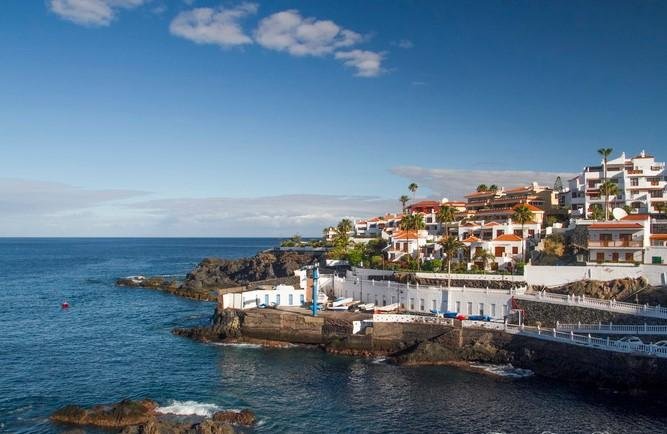
Tenerife ranks amongst the destinations in southern Europe that attract the most property investment. The combination of steady year-round tourism, a unique tax regime in the Canary Islands and strong demand for residential lettings makes the island an ideal environment for diversifying one’s assets. However, not all areas operate under the same dynamics or offer the same financial returns.
Analysing property investment in Tenerife requires an understanding of the operational differences between the south and the north, an assessment of the new regulations on holiday lettings, and a calculation of the actual net return on each type of property. Below, we set out the technical, legal and financial information required to make informed purchasing decisions.
Why invest in Tenerife: Economic, tourism and tax factors
Decide investing in Tenerife It offers distinct structural advantages compared with markets on the mainland or in other European countries. The Atlantic climate allows for high tourist occupancy rates in both winter and summer, eliminating the usual seasonality seen in mainland destinations.
The key pillars underpinning the market’s profitability on the island are:
- Continuous employment: Mature areas in the south record annual occupancy rates ranging from 75% to 85% in well-located accommodation.
- Reduced indirect taxation: In the Canary Islands, the standard VAT rate of 21% does not apply; instead, the Canary Islands General Indirect Tax (IGIC) applies, with a standard rate of 7% for newly built properties. For second-hand properties, the Property Transfer Tax (ITP) is set at 6.5%, which is below the national average.
- Business incentives: Corporate investors may benefit from schemes under the Economic and Tax Regime (REF), such as the Canary Islands Investment Reserve (RIC) or the Canary Islands Special Zone (ZEC), which reduces corporation tax to 4% when the investment and employment requirements are met.
- Growing demand for housing: Population growth, the influx of remote workers and the flow of university students into the metropolitan area are exerting constant pressure on the long-term rental market.
Best areas to invest in Tenerife by rental type
Choosing the right location determines the business model and the expected return. The island has two clearly defined markets: the south, which focuses on international clients and holiday rentals; and the north, together with the metropolitan area, which focuses on long-term residential lettings.
Costa Adeje, Playa de las Américas and Los Cristianos (Southern Area)
The south-west of the island accounts for the highest volume of property transactions for tourist use. Properties located in municipalities such as Adeje and Arona stand out for their high liquidity and high average nightly rates.
- Tenant profile: International tourists (mainly British, German and Nordic) with medium-to-high purchasing power.
- Estimated gross return: Between 6% and 9% per annum for professionally managed holiday properties.
- Asset type: Apartment blocks with communal swimming pools, semi-detached houses and detached villas in prime locations such as El Duque and La Caleta.
Santa Cruz de Tenerife and San Cristóbal de La Laguna (Metropolitan Area)
The north-eastern urban centre is the driving force behind the residential property market in Tenerife. It is the ideal choice for those seeking stable, long-term income with low tenant turnover.
- Tenant profile: Local families, healthcare staff, civil servants and the university community associated with the University of La Laguna.
- Estimated gross return: Between a 5% and a 7% on a long-term hire basis.
- Advantages: Less reliance on local tourism regulations, lower operating costs and a minimal vacancy rate throughout the year.
Puerto de la Cruz and the Orotava Valley (Northern Region)
The north offers more competitive purchase prices per square metre than the south. It has a mixed market comprising traditional European tourism and demand for permanent residence.
- Tenant profile: Long-stay visitors in winter and local residents throughout the year.
- Estimated gross return: Between 5.5% and 7.5%.
- Advantages: A lower financial barrier to entry when purchasing property compared with Adeje or Arona, with an excellent standard of services and well-established infrastructure.
Guide to Isora and Abama (Exclusive Area)
This south-western region has seen significant growth, driven by upmarket developments, golf courses and five-star hotel complexes.
- Tenant profile: A high-net-worth investor focused on capital preservation, the active appreciation of the property’s value, and personal use combined with managed letting.
- Estimated gross return: Between 4% and 6% per annum, with strong potential for capital gains upon resale.
Legal Framework: Regulation of holiday rentals and the Canary Islands Housing Act
A key factor for those planning the property investment in Tenerife These are the regulations governing holiday lettings. This activity in the archipelago is governed by Law 6/2025 on the Sustainable Management of the Tourist Use of Residential Properties.
To operate with complete legal certainty, it is essential to check that the following administrative requirements are met:
- Municipal boundary of 10%: The law stipulates, as a general rule, that local councils shall limit holiday home licences to a maximum of 10% of the residential building capacity in each municipality (20% in the so-called ‘green islands’).
- Land Registry and NRUA code: To advertise the property on digital platforms, you must obtain the NRUA code via the Digital One-Stop Shop at the Association of Land Registrars.
- Agreement within the Owners’ Association: Under the Condominium Act, the owners’ association may prohibit or impose conditions on holiday lettings in the building by means of a vote approved by a three-fifths (3/5) majority.
- Technical requirements for habitability: The property must have a valid Certificate of Occupancy, an Energy Performance Certificate, hot water systems with a minimum of 70% of renewable energy generation, and must comply with the applicable accessibility regulations.
Legal disclaimer: Residential lettings (long-term) are not subject to these tourist quotas nor do they require an NRUA code, which means they offer a direct route free from planning restrictions.
Priority asset classes for investment in Tenerife
The choice of property type must be in line with the allocated budget, the investor’s management capacity and their objectives.
Flat and Apartments
These are the properties with the highest turnover on the island. One- and two-bedroom properties in coastal or urban areas offer the best balance between purchase price and subsequent liquidity. To explore current market opportunities by location and budget, please take a look at our catalogue of flats for sale in Tenerife.
Urban Land and Plots
For investors with a focus on property development or a medium-term development outlook, buying property in Tenerife This type of land is suitable for the construction of residential developments or detached houses. Before making a booking, you should check the reference on the Electronic Portal of the Land Registry and request the municipal planning report. You can analyse plots with development potential in our section on land for sale.
Industrial Buildings and Commercial Premises
The growth in commercial and industrial activity in strategic areas such as the southern industrial estates, Güímar and the metropolitan area is creating leasing opportunities for logistics and service companies. These properties typically involve long-term leases with corporate tenants. We recommend that you consider our range of industrial buildings.
Tax structure and taxes when buying property in Tenerife
Calculating the actual return requires taking into account all tax costs associated with the acquisition and operation of the asset.
| Tax / Item | New Build | Existing Homes (Second-hand) |
| Main Indirect Tax | IGIC (7%) | ITP (6.5%) |
| Stamp Duty (AJD) | 1% | Not applicable (except in the case of a mortgage) |
| Notary’s Office and Land Registry | Approx. 1% – 1.5% | Approx. 1% – 1.5% |
| Administrative and Legal Advisory Services | Approx. 1% | Approx. 1% |
| Total Percentage of Purchase | ~ 9% – 9.5% | ~ 8.5% – 9% |
During the operational phase:
- Tax on holiday rentals: This activity is subject to the 7% IGIC tax. However, individuals with an annual turnover of less than €30,000 may register under the Special Scheme for Small Business Owners and Self-Employed Professionals (REPEP) to be exempt from declaring this tax.
- Personal Income Tax / Non-Resident Income Tax: The income received is declared as income from property investment. In the case of long-term tenancy agreements for a principal residence, there are regional and national tax reliefs on the net taxable income.
Method for calculating the real return on investment
To avoid inaccurate projections, it is necessary to calculate the net return by deducting all the property’s fixed and variable costs.
The applicable calculation formulae are:
Gross Profitability (1Q to 3Q) = (Annual Rental Income ÷ Total Investment) × 100
Net Profitability (1Q to 3Q) = [(Annual Revenue – Total Operating Expenses) ÷ Total Investment] × 100
ItThe operating expenses that you must deduct from gross revenue include:
- Property Tax (IBI) and the local council’s refuse collection charge.
- Ordinary and extraordinary expenses of the owners’ association.
- Insurance policies (building, contents and cover against non-payment).
- Fees charged by comprehensive management or marketing companies (which typically amount to between 15% and 25% of revenue in the holiday rental model).
- Costs relating to corrective maintenance, supplies and the depreciation provision.
Common mistakes when buying property in Tenerife and how to avoid them
- Omit the municipal planning check: Signing a deposit agreement without checking whether the property is in an area with a high concentration of licences or whether the owners’ association’s rules prohibit tourist use.
- Failure to calculate the impact of freight charges: The cost of building projects in the Canary Islands may vary compared with the mainland due to the cost of shipping certain materials. It is advisable to work with fixed quotes from local builders.
- Failing to check the property’s title status: It is compulsory to apply for the Nota Simple at the Land Registry to ensure that the property is transferred free from any charges, tax liabilities or easements.
- Failure to understand the dynamics of the microclimate: Altitude and the orientation of the land have a direct impact on average temperatures and tenant demand, particularly on the north and south-facing slopes of the island.
Conclusion
The property market in Tenerife offers excellent conditions for investors seeking rental income and capital appreciation. The success of the investment depends on carefully analysing the location, selecting the most suitable letting model and strictly complying with the applicable legal regulations.
If you’d like to explore the full range of properties on the island and filter listings according to your investment criteria, you can use our property search engine in Tenerife.
Professional advice for your property investment
To analyse the the best areas to invest in Tenerife This requires the support of a technical team with first-hand knowledge of local town planning, the tax system and asset valuation. At West Islands Properties, we assess each property to ensure transparent and efficient transactions.
If you need help selecting properties, assessing the profitability of an investment or organising the purchase of your next property, Get in touch with our specialists today. We’d be delighted to provide you with personalised advice throughout the process.

 Spanish
 English
 French
 German
 Russian
 Italian
 Chinese
 Polish
 Norwegian
 Swedish
 Finnish
 Danish